Voice AI vs. Virtual Assistants: Which One Do You Need?
Written by
PipeCrush Team
Published
Jan 13, 2026
Reading time
9 min read

When you need someone (or something) to answer your business phone, you have two modern options: hire a virtual assistant or implement voice AI. Both solve the "missed call" problem, but in fundamentally different ways—and at drastically different price points.
This article compares virtual assistant services to AI phone systems across cost, coverage, capabilities, and quality. For the complete guide to AI voice automation, read our AI Receptionist Guide. For broader context on building AI-powered support, see our RAG Business Guide.
What Is a Virtual Assistant?
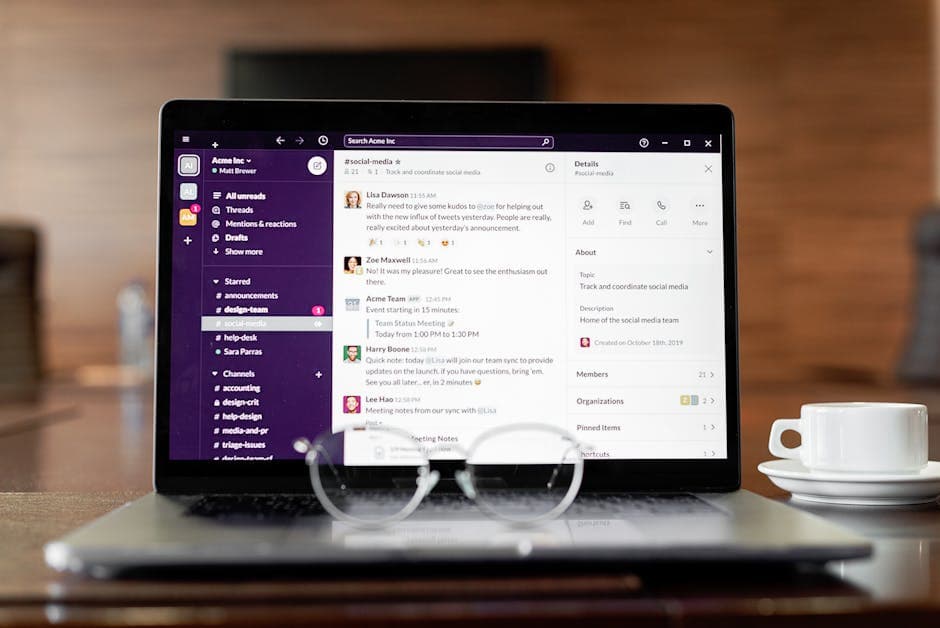
A virtual assistant (VA) is a human who works remotely to handle phone calls, scheduling, and administrative tasks.
Common VA Services:
- Ruby Receptionists
- Smith.ai
- WoodBows
- PATLive
- Upwork/Freelance VAs
Typical Engagement Models:
- Shared VA (agency model): You share an assistant with other clients
- Dedicated VA (freelance): One person works exclusively for you
- Hybrid: Dedicated during business hours, shared after hours
What Is Voice AI?
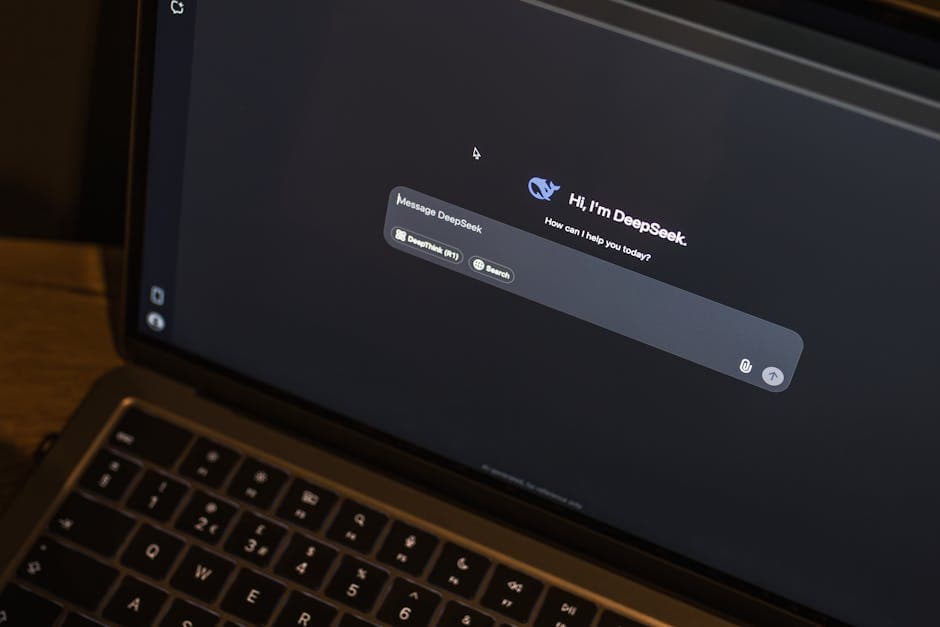
Voice AI is software that uses natural language processing to understand callers, answer questions, route calls, and book appointments—all without human intervention.
Key Technologies:
- Speech-to-text (transcribe caller's words)
- Natural language understanding (interpret intent)
- Text-to-speech (respond naturally)
- API integrations (check calendar, create CRM records)
Platform Examples:
- PipeCrush AI Phone
- Dialpad AI
- Aircall AI
- Custom-built solutions (Twilio + OpenAI)
Cost Comparison
Virtual Assistant Pricing
Ruby Receptionists:
- $319/month for 50 minutes
- $649/month for 200 minutes
- $1,079/month for 500 minutes
- Overage: $3.19/minute
Smith.ai:
- $255/month for 30 calls
- $545/month for 60 calls
- $1,275/month for 120 calls
- Overage: $8.50/call
Dedicated Freelance VA:
- Entry-level: $7-$12/hour
- Experienced: $15-$25/hour
- Full-time (40 hrs/week): $1,200-$4,000/month
Typical Monthly Cost (100 inbound calls):
- Shared VA (Ruby/Smith): $650-$850/month
- Dedicated VA (20 hrs/week): $1,200-$2,000/month
Voice AI Pricing
Typical AI Phone System:
- $199-$499/month (flat rate)
- Unlimited calls included
- All features included (no tiers)
- No per-minute or per-call fees
Cost for 100 calls/month:
- Voice AI: $199-$499/month (same price)
- Virtual Assistant: $650-$2,000/month
Cost for 500 calls/month:
- Voice AI: $199-$499/month (same price)
- Virtual Assistant: $1,079-$5,000/month
3-Year Total Cost of Ownership
Virtual Assistant (Shared, 100 calls/month):
- Year 1: $850 × 12 = $10,200
- Year 2: $850 × 12 = $10,200
- Year 3: $850 × 12 = $10,200
- 3-Year Total: $30,600
Voice AI:
- Year 1: $299 × 12 = $3,588
- Year 2: $299 × 12 = $3,588
- Year 3: $299 × 12 = $3,588
- 3-Year Total: $10,764
Savings: $19,836 (65% reduction)
Coverage Comparison
Virtual Assistant Coverage
Shared VA (Ruby/Smith):
- Hours: Usually 9 AM - 8 PM ET (or custom schedule)
- Days: Monday-Friday (weekend add-on available)
- Holidays: Limited coverage or upcharge
- Breaks: Calls may go to overflow during shift changes
- Time Zones: You pay for hours not aligned to your local time
Dedicated VA:
- Hours: 40 hours/week (9 AM - 5 PM in their timezone)
- Days: Monday-Friday
- Holidays: They're off (you pay but get no coverage)
- Sick Days: No backup coverage
- Vacation: You're responsible for finding temp coverage
Coverage Gaps:
If 40% of your calls come after hours (evenings, weekends):
- 100 calls/month = 40 calls go to voicemail
- At 10% conversion and $2,500 deal value
- Lost revenue: $10,000/month = $120,000/year
Voice AI Coverage
AI Phone System:
- Hours: 24/7/365 (no gaps)
- Days: Every day including holidays
- Breaks: Never
- Sick Days: Doesn't get sick
- Vacation: No vacations
- Time Zones: Works in all time zones simultaneously
Coverage Impact:
- 100% of calls answered
- Zero after-hours lost opportunities
- International callers accommodated
- Weekend prospects captured
Capability Comparison
| Task | Virtual Assistant | Voice AI |
|---|---|---|
| Answer calls | ✅ Yes | ✅ Yes |
| Take messages | ✅ Yes | ✅ Yes (transcribed) |
| Transfer calls | ✅ Yes | ✅ Yes (intelligent routing) |
| Book appointments | ✅ Yes (manually checks calendar) | ✅ Yes (real-time calendar check) |
| Answer FAQs | ✅ Yes (if trained) | ✅ Yes (AI-powered knowledge base) |
| CRM data entry | ⚠️ Manual (delay) | ✅ Instant (auto-logged) |
| Qualify leads | ⚠️ Inconsistent | ✅ Consistent scoring |
| Send follow-up SMS | ❌ No (manual step) | ✅ Yes (automatic via SMS) |
| Escalate urgency | ✅ Yes | ✅ Yes |
| Multi-language | ⚠️ Depends on VA | ✅ Yes (50+ languages) |
| Scale instantly | ❌ No (hire more VAs) | ✅ Yes (same flat price) |
Deep Dive: Appointment Booking
Virtual Assistant Process:
- Caller asks to schedule meeting
- VA says "Let me check the calendar..."
- VA opens your calendar (Google/Outlook)
- VA manually scans for availability
- VA proposes time
- Caller confirms
- VA manually creates calendar event
- VA manually sends confirmation email
- Later: VA logs call in CRM
Time: 3-5 minutes per booking
Voice AI Process:
- Caller asks to schedule meeting
- AI checks online booking calendar in 0.5 seconds
- AI proposes 3 available times
- Caller confirms
- AI books meeting, sends confirmation email & SMS
- AI logs in CRM with call recording
Time: 60-90 seconds per booking
Result: AI books 3x faster and with perfect data accuracy.
Deep Dive: Lead Qualification
Virtual Assistant Approach:
- Asks scripted questions
- Takes notes (quality varies)
- Adds notes to CRM later
- Scoring is subjective
Voice AI Approach:
- Asks dynamic questions based on responses
- Auto-transcribes entire call
- Extracts key entities (name, company, pain points, budget, timeline)
- Scores lead based on defined criteria
- Logs structured data in CRM instantly
- Triggers appropriate email sequence
Example Lead Score:
- Mentioned budget over $10k: +20 points
- Timeline "this quarter": +15 points
- Decision-maker (CEO, CTO): +10 points
- Existing competitor mentioned: +10 points
Total: 55 points = Hot Lead → Route to senior sales rep
Quality & Consistency
Virtual Assistant Quality Factors
Strengths:
- Human empathy and emotional intelligence
- Can handle complex, ambiguous situations
- Build rapport with repeat callers
- Escalate unusual situations appropriately
Weaknesses:
- Quality varies by individual VA
- Shared VAs lack deep business context
- Mistakes in message-taking (mishear names, companies)
- Inconsistent call handling between different VAs
- Training decay over time
- Off days, mood, energy level variations
Real-world example:
A SaaS company using Ruby Receptionists found:
- 18% of messages had name/company misspellings
- 12% of appointments booked at wrong time
- 31% of caller context lost in handoff to sales team
Voice AI Quality Factors
Strengths:
- 100% consistent (same quality every call)
- Perfect memory (recalls all past interactions)
- Never misspells names (asks for spelling if unclear)
- Processes all calls with same attention
- Learns and improves continuously
- Scales without quality degradation
Weaknesses:
- Can struggle with heavy accents (improving rapidly)
- May misunderstand slang or industry jargon
- Limited emotional intelligence
- Can't handle extreme edge cases (angry caller, crisis)
- Requires good training data
Real-world example:
A professional services firm using AI phone found:
- 99.2% transcription accuracy
- 0% appointment booking errors
- 100% of caller data captured in CRM
- 94% caller satisfaction (post-call survey)
When to Choose Virtual Assistant
Choose a human VA if:
Your callers are mostly elderly or non-tech-savvy
- May prefer human interaction
- Less comfortable with AI
You handle highly sensitive or emotional calls
- Crisis hotline
- Healthcare urgent matters
- Legal emergencies
Your industry requires complex, nuanced conversations
- Real estate negotiations
- High-touch B2B sales with 30+ minute discovery calls
- Custom consulting requiring deep business knowledge
You have regulatory requirements for human handling
- Some healthcare scenarios
- Legal intake in certain jurisdictions
You value relationship-building over efficiency
- Boutique services
- Luxury brands
- Personal concierge
When to Choose Voice AI
Choose AI phone system if:
You need 24/7 coverage
- After-hours calls = 40% of volume
- International customers in different time zones
- Weekend inquiries
Call volume is high or unpredictable
- 200+ calls/month (VA costs explode)
- Seasonal spikes (holiday, tax season)
- Rapid growth trajectory
You want perfect CRM data
- Every call logged instantly
- Zero data entry errors
- Complete conversation history
Speed matters
- Instant appointment booking
- Real-time lead routing
- Immediate escalation
You're cost-sensitive
- Bootstrapped startup
- Need to scale without linear cost increases
- Want predictable monthly expenses
Your calls are routine and repetitive
- "What are your hours?"
- "How much does it cost?"
- "I'd like to schedule a consultation"
Hybrid Approach
Many businesses use both:
Model 1: AI First, Human Escalation
- AI handles 90% of calls (routine inquiries, booking, FAQs)
- Complex/angry calls escalated to human VA
- Best of both: efficiency + human touch when needed
Cost:
- AI: $299/month
- Part-time VA (10 hrs/week): $400/month
- Total: $699/month (vs $2,000 for full-time VA)
Model 2: Business Hours VA, After-Hours AI
- 9-5: Dedicated VA answers (premium experience)
- Nights/Weekends: AI handles (better than voicemail)
Cost:
- Part-time VA (40 hrs/week): $1,600/month
- AI: $299/month
- Total: $1,899/month (vs $3,000+ for 24/7 VA coverage)
Migration Paths
From VA to AI
Week 1: Run in Parallel
- Keep existing VA
- Set up AI on new test number
- Route 10% of traffic to AI
- Compare quality, caller feedback
Week 2: Increase AI Traffic
- Route 50% to AI
- Monitor escalation rate
- Refine AI scripts based on real calls
Week 3: Full Cutover
- Route 100% to AI
- Keep VA on retainer for first month (safety net)
- Cancel VA after confidence established
From AI to Hybrid
If you find AI struggles with specific call types:
- Configure AI to escalate to human for:
- Angry/frustrated callers
- Complex technical questions
- VIP customers
- Calls over 5 minutes
- Hire part-time VA for escalations only
The Bottom Line
For most small businesses and startups:
| Dimension | Virtual Assistant | Voice AI | Winner |
|---|---|---|---|
| Cost | $650-$2,000/mo | $199-$499/mo | 🏆 AI |
| Coverage | 40-60 hrs/week | 24/7/365 | 🏆 AI |
| Scalability | Hire more VAs | Same price | 🏆 AI |
| Data Quality | Manual entry, errors | Auto-logged, perfect | 🏆 AI |
| Consistency | Varies | 100% consistent | 🏆 AI |
| Empathy | High | Moderate | 🏆 VA |
| Complex Situations | Handles well | May struggle | 🏆 VA |
Voice AI wins 5 out of 7 categories.
ROI Calculation (100 calls/month):
Virtual Assistant (1 year):
- Cost: $850 × 12 = $10,200
- Coverage: 9-5 only = 60% of calls answered
- Missed after-hours revenue: $60,000 (conservative)
Voice AI (1 year):
- Cost: $299 × 12 = $3,588
- Coverage: 24/7 = 95% of calls answered
- Missed after-hours revenue: $0
- Captured revenue increase: $60,000
Net Impact:
- Cost savings: $6,612
- Revenue increase: $60,000
- Total ROI: $66,612
Action Steps:
- Calculate your current missed call cost (see our Economics of Missed Calls guide)
- Evaluate your call types (routine vs complex)
- Test AI phone for 2 weeks with test number
- Compare caller feedback, booking rate, data quality
- Choose: AI only, VA only, or hybrid
Frequently Asked Questions
Which is more cost-effective: voice AI or a virtual assistant?
Voice AI is dramatically more cost-effective for most businesses. AI phone systems cost 49-199 dollars per month for unlimited calls with 24/7 coverage. Virtual assistants cost 15-25 dollars per hour (2,500-4,000 dollars per month for full-time coverage) with limited hours and no after-hours support. For businesses receiving 50+ calls per week, AI typically delivers 10-20x ROI compared to VAs.
Can voice AI handle complex customer questions as well as a human?
Voice AI excels at structured information retrieval—answering questions from your knowledge base, checking CRM records, booking appointments, and qualifying leads with consistent accuracy. For nuanced conversations requiring empathy, negotiation, or creative problem-solving, humans still have an edge. The best approach for complex needs is hybrid: AI handles 80-90% of routine calls, escalating edge cases to humans.
What happens when voice AI doesn't know the answer to a question?
Modern AI phone systems have multiple fallback strategies. They can transfer the call to a human team member, take a detailed message and create a task in your CRM, offer to send information via email, schedule a callback when someone is available, or admit uncertainty and offer alternative resources. You configure these behaviors during setup and can review call transcripts to identify knowledge gaps and improve the AI over time.
Do I need to choose between voice AI and a virtual assistant, or can I use both?
You can use both in a hybrid model. The most cost-effective approach is to start with AI for 24/7 first-line coverage, then add a virtual assistant for complex escalations or specific hours when you want human touch. For example: AI handles all after-hours calls and routine questions, while a VA manages VIP clients or complicated support issues during business hours. This gives you human judgment when needed without paying for full-time human coverage.
How quickly can I get voice AI up and running compared to hiring a VA?
Voice AI can be fully operational in under 10 minutes using modern no-code platforms. You configure the system, test it, and go live the same day. Hiring a virtual assistant typically takes 1-2 weeks (posting job, interviewing candidates, onboarding, training) plus ongoing management. If you need phone coverage today, AI is the only viable option. If you need coverage starting next month, you have time to evaluate both options properly.
For most businesses, the answer is clear: Start with AI, add human escalation only if needed.
Your CRM, deals pipeline, and customer data deserve the accuracy and speed that only AI can deliver.
Get the Complete Guide
Download this resource as a beautifully formatted PDF for offline reading, sharing with your team, or future reference.
PipeCrush Team
The PipeCrush team builds AI-powered revenue infrastructure for modern SaaS companies.
Never miss an update
Get technical insights on revenue operations, cold email infrastructure, and AI-powered support delivered to your inbox.
No spam, ever. Unsubscribe anytime.